
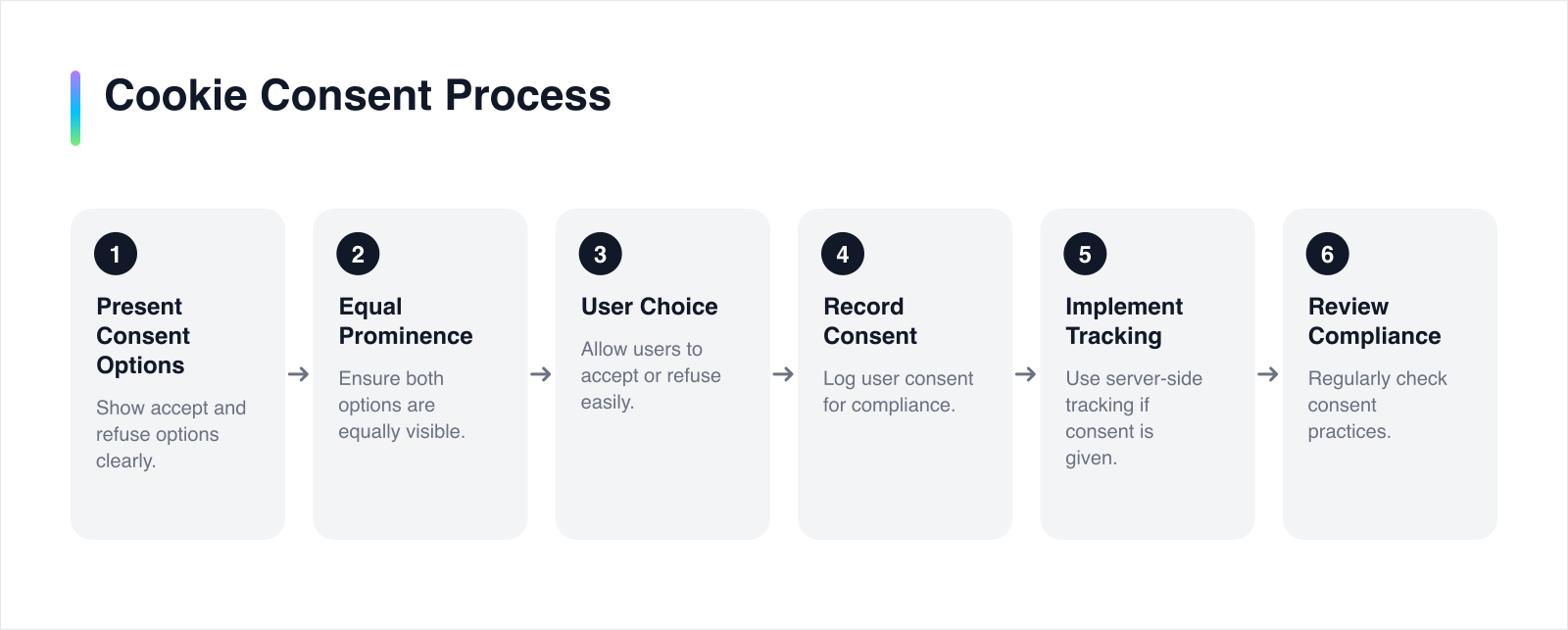
Almost every cookie banner shares the same defect: accepting is a big dark button, refusing is a grey link. This imbalance is precisely what European regulators, like Spain's AEPD, criticize. Consent must be as easy to refuse as it is to give. If refusing takes more clicks or is less visible, it is not freely given consent. The stakes are high: non-compliance with GDPR can lead to significant fines and damage to brand trust. This article discusses how businesses can implement consent-first analytics, ensuring marketing efforts align with GDPR requirements. By the end, you'll understand how to measure marketing performance ethically, using frameworks and real-world examples to maintain compliance without sacrificing valuable insights.
Why Cookie Consent Must Be Equal: Lessons from Recent Fines
The importance of equal prominence in cookie consent options is underscored by recent enforcement actions. The French CNIL's issuance of over €300 million in fines between 2022 and 2024 highlights the significant financial risks associated with non-compliance. These fines often stem from violations where consent mechanisms fail to provide equal ease in accepting or refusing cookies.
Legal Requirements for Cookie Consent
Under GDPR, consent must be freely given, specific, informed, and unambiguous. This means that users should have the option to refuse consent as easily as they accept it. According to the European Data Protection Board, any imbalance in the prominence of consent options compromises the validity of the consent. If a website presents a bold, inviting button to accept cookies and a less visible link to refuse them, it fails to meet GDPR standards.
Consequences of Non-Compliance
Failure to adhere to these requirements can lead to severe penalties. The CNIL's enforcement actions illustrate that regulators are actively monitoring compliance, with cookie consent violations being a primary target. Beyond financial penalties, non-compliance can erode customer trust and damage brand reputation.
Comparison of Consent Mechanisms
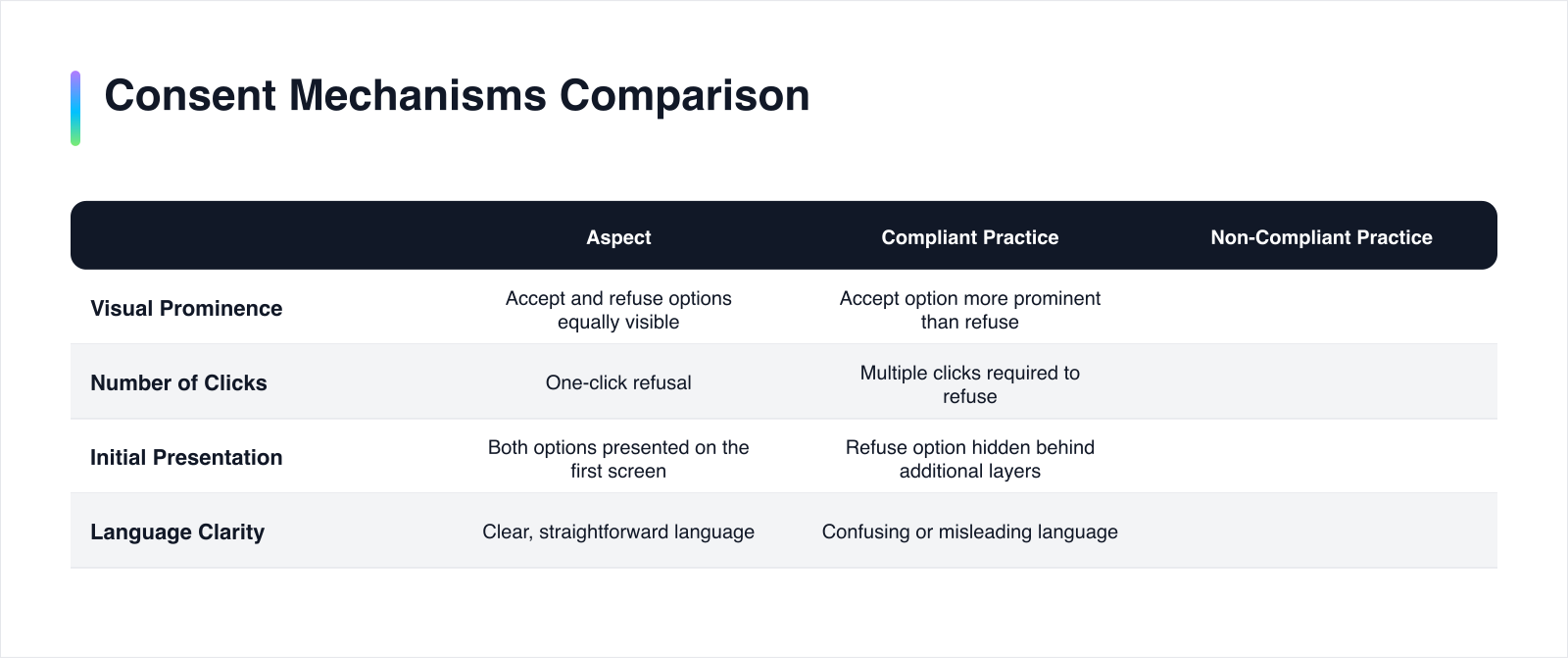
A compliant consent mechanism must ensure that both acceptance and refusal are equally accessible. Here’s a comparison of compliant versus non-compliant practices:
| Aspect | Compliant Practice | Non-Compliant Practice |
|---|---|---|
| Visual Prominence | Accept and refuse options equally visible | Accept option more prominent than refuse |
| Number of Clicks | One-click refusal | Multiple clicks required to refuse |
| Initial Presentation | Both options presented on the first screen | Refuse option hidden behind additional layers |
| Language Clarity | Clear, straightforward language | Confusing or misleading language |
By adhering to these standards, businesses can avoid the pitfalls that lead to costly fines and maintain the trust of their users. Implementing consent-first analytics not only aligns with regulatory requirements but also supports ethical marketing practices.
What Counts as 'Strictly Necessary': Debunking Common Myths
Understanding what qualifies as 'strictly necessary' cookies is crucial for GDPR compliance. Misconceptions abound, particularly regarding analytics cookies, which often leads businesses to inadvertently breach regulations.
Defining 'Strictly Necessary' Cookies
'Strictly necessary' cookies are those essential for the basic operation of a website. They enable core functionalities, such as managing user sessions or remembering privacy preferences. According to the European Data Protection Board, these cookies can be set without user consent because the site cannot function properly without them.
Why Analytics Cookies Require Consent
Analytics cookies, however, do not fall under the 'strictly necessary' category. They are used to gather data on user behavior, which is not essential for the website's operation. The GDPRWise guide highlights that analytics cookies require explicit consent from users, as they are not vital for the website's basic functionality.
Common Misconceptions
Many businesses mistakenly believe that lightly configured analytics tools are exempt from consent requirements. This is incorrect. Regardless of how minimal the data collection might be, if the purpose is not essential to the service requested by the user, consent is mandatory.
Framework for Evaluating Cookie Necessity
To determine whether a cookie is 'strictly necessary', consider the following framework:
| Question | 'Strictly Necessary' | Analytics Cookies |
|---|---|---|
| Is the cookie essential for the core service requested by the user? | Yes | No |
| Can the website function without this cookie? | No | Yes |
| Does the cookie collect data for performance analysis? | No | Yes |
Using this framework helps businesses evaluate their cookie usage accurately, ensuring compliance with GDPR.
Practical Implications
Understanding the distinction between necessary and non-necessary cookies allows businesses to configure their consent mechanisms correctly. By ensuring analytics cookies are subject to user consent, companies not only adhere to legal requirements but also foster trust with their users. This compliance is vital for maintaining a positive brand reputation and avoiding hefty fines.
Incorporating a consent-first approach to analytics is more than a regulatory obligation; it's a commitment to ethical data practices. By clearly distinguishing between necessary and non-necessary cookies, businesses can align their operations with GDPR standards, ensuring both compliance and customer trust.
How to Implement Server-Side Tracking Without Violating GDPR
Server-side tracking offers a robust alternative to traditional client-side methods, but it still requires careful handling to ensure GDPR compliance. This section provides a step-by-step method to implement server-side tracking that respects user consent.
Consent Is Still Required
Even with server-side tracking, obtaining explicit user consent remains mandatory. According to the European Data Protection Board, any storage or access to information on user devices requires prior consent. This includes server-side methods where data is processed on the server rather than the user's device.
Step-by-Step Implementation
Step 1: Obtain Explicit Consent
Before implementing server-side tracking, ensure that users have given explicit consent. This means presenting a clear choice between accepting and refusing tracking, with equal prominence for both options.
Step 2: Configure Server-Side Scripts
Set up server-side scripts to handle data collection. These scripts should be designed to process data without storing personal identifiers unless consent has been obtained. This approach minimizes the risk of violating GDPR by ensuring that no identifiable information is processed without permission.
Step 3: Use Aggregated Data
Focus on collecting aggregated data that cannot be traced back to individual users. By analyzing trends and patterns rather than personal data, businesses can gain valuable insights while remaining compliant.
Step 4: Implement Data Minimization
Adopt a data minimization strategy by collecting only the information necessary for your analytics purposes. This aligns with GDPR principles and reduces the risk of handling excessive personal data.
Technical Solutions for Compliance
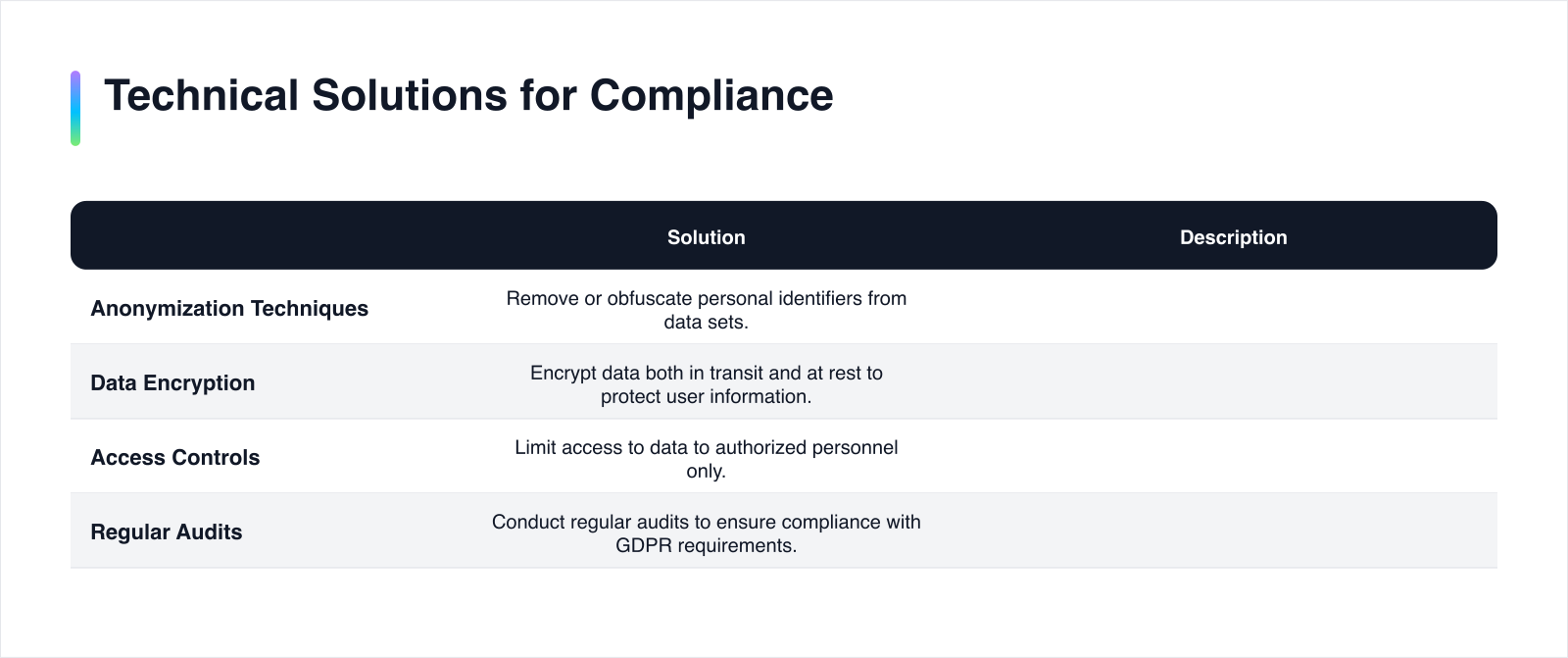
Several technical solutions can help ensure compliance with GDPR while using server-side tracking:
| Solution | Description |
|---|---|
| Anonymization Techniques | Remove or obfuscate personal identifiers from data sets. |
| Data Encryption | Encrypt data both in transit and at rest to protect user information. |
| Access Controls | Limit access to data to authorized personnel only. |
| Regular Audits | Conduct regular audits to ensure compliance with GDPR requirements. |
These solutions not only help in maintaining compliance but also build trust with users by demonstrating a commitment to data protection.
Practical Considerations
Implementing server-side tracking requires a thorough understanding of both technical and regulatory aspects. Businesses must ensure that their tracking methods are transparent and that users are fully informed about how their data will be used. By integrating consent-first analytics with server-side tracking, companies can achieve a balance between valuable insights and user privacy.
Incorporating these strategies allows businesses to maintain compliance with GDPR while still measuring marketing performance effectively. This approach not only protects against legal risks but also enhances customer trust and loyalty.
Case Studies: Successful Consent-First Analytics Implementations
XS4ALL's Implementation of Piwik PRO
XS4ALL, a Dutch internet service provider, successfully implemented Piwik PRO Analytics Suite to achieve GDPR-compliant, privacy-first analytics. This move was driven by the need to enhance customer privacy while still obtaining valuable insights into user behavior. By choosing Piwik PRO, XS4ALL ensured full data ownership and control, which is crucial for compliance with GDPR regulations.
The implementation allowed XS4ALL to gain cross-device customer insights without compromising user privacy. According to CaseStudies.com, the company was able to maintain comprehensive analytics capabilities while adhering to strict privacy standards. This approach not only safeguarded customer data but also reinforced trust, a critical factor in the competitive ISP market.
Benefits of Privacy-First Analytics Tools Like Matomo
Tools like Matomo offer a robust alternative to traditional analytics platforms by prioritizing user privacy and data protection. Matomo provides GDPR-compliant analytics with full data ownership, allowing businesses to conduct detailed analysis without infringing on user rights. According to Matomo, this privacy-first approach enables organizations to maintain compliance while still gaining actionable insights.
A key advantage of using Matomo is the ability to host the analytics platform on-premises, ensuring that data never leaves the company's control. This setup aligns with GDPR's emphasis on data sovereignty and protection. Additionally, Matomo's features include anonymization of IP addresses and the ability to respect Do Not Track settings, further enhancing user privacy.
Worked Scenario: Implementing Consent-First Analytics
Consider a mid-sized e-commerce company aiming to implement consent-first analytics. The company wants to ensure GDPR compliance while still understanding customer behavior to optimize marketing strategies.
- Choosing the Right Tool: The company opts for Matomo due to its privacy-first features and full data control. This decision is informed by the need to align with GDPR requirements and maintain customer trust.
- Setting Up Consent Mechanisms: A compliant cookie consent banner is implemented, ensuring equal prominence for accept and refuse options. This setup aligns with the guidelines provided by the European Data Protection Board, ensuring that consent is freely given.
- Configuring Analytics: The company configures Matomo to anonymize IP addresses and respect user privacy settings. This configuration ensures that analytics data collected is compliant and non-intrusive.
- Analyzing Data: With consent-first analytics in place, the company can now analyze aggregated data to identify trends and improve marketing efforts without compromising individual privacy.
Comparison of Analytics Tools
Here's a comparison of traditional analytics tools versus privacy-first options like Matomo and Piwik PRO:
| Aspect | Traditional Tools | Privacy-First Tools (Matomo, Piwik PRO) |
|---|---|---|
| Data Ownership | Often third-party controlled | Full data ownership |
| GDPR Compliance | May require additional measures | Built-in compliance features |
| User Privacy | Limited privacy controls | Enhanced privacy and anonymization |
| Hosting Options | Typically cloud-based | On-premises or cloud options available |
By adopting privacy-first analytics tools, businesses can achieve a balance between gaining insights and respecting user privacy. This approach not only ensures compliance with GDPR but also builds a foundation of trust with customers.
The Real Cost of Non-Compliance: Beyond Lost Data
Non-compliance with GDPR goes beyond the immediate loss of data. It impacts business operations, trust, and long-term viability. Understanding and documenting data collection processes is crucial for mitigating these risks.
Understanding and Documenting Data Collection
Compliance requires a thorough understanding of what data is collected, how it's processed, and for what purpose. This involves creating detailed documentation that outlines every data touchpoint. Without this, businesses risk non-compliance, leading to fines and reputational damage. According to the European Data Protection Board, transparency in data processing is a core GDPR requirement. Companies must ensure that every data collection activity is justified, documented, and communicated to users.
Long-term Business Implications
The long-term implications of non-compliance extend beyond immediate penalties. Businesses face a trade-off between compliance costs and potential reputational harm. Investing in compliance infrastructure may seem costly, but it protects against the more significant risks of customer attrition and loss of market position. A business that fails to comply risks being seen as untrustworthy, which can lead to customer churn and reduced market share.
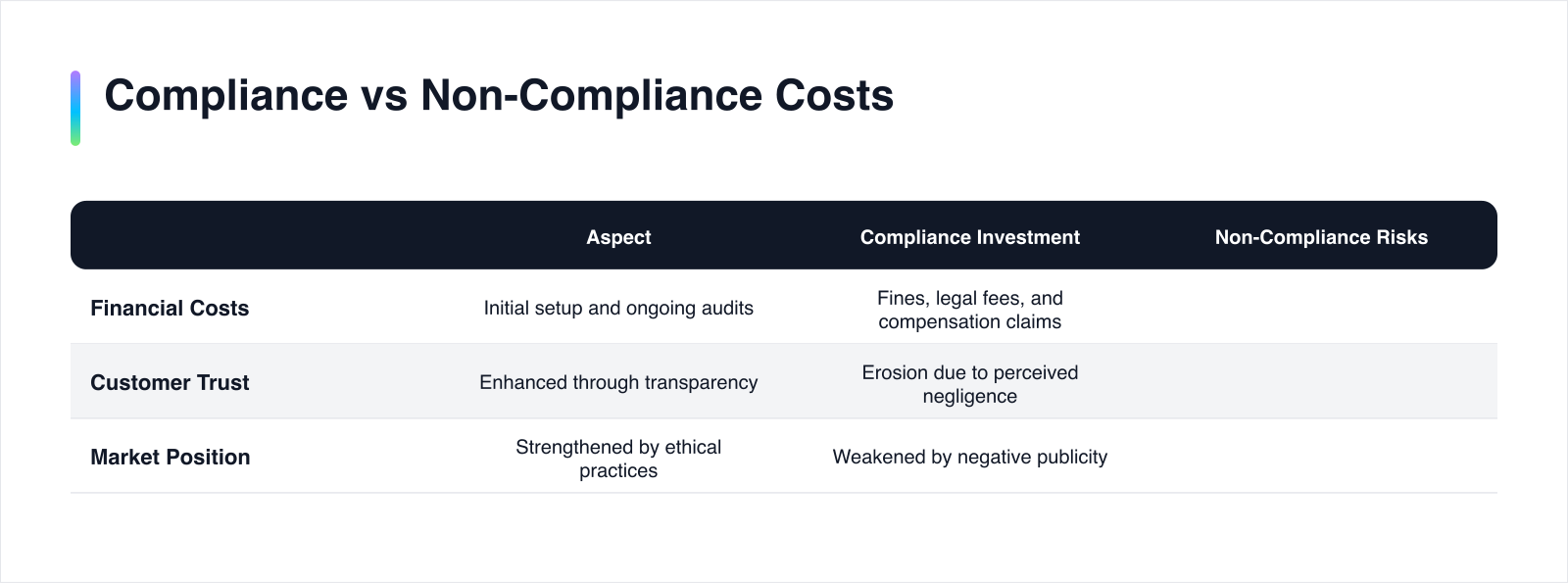
Consider the trade-off analysis:
| Aspect | Compliance Investment | Non-Compliance Risks |
|---|---|---|
| Financial Costs | Initial setup and ongoing audits | Fines, legal fees, and compensation claims |
| Customer Trust | Enhanced through transparency | Erosion due to perceived negligence |
| Market Position | Strengthened by ethical practices | Weakened by negative publicity |
Investing in compliance not only mitigates legal risks but also enhances customer trust. Transparent data practices align with consumer expectations and regulatory demands, fostering loyalty and competitive advantage.
Practical Steps for Compliance
To navigate these challenges, businesses should adopt a structured approach to compliance. This includes regular audits, employee training, and the integration of privacy-first technologies. By embedding compliance into business processes, companies can ensure they meet GDPR standards while maintaining operational efficiency.
Incorporating these strategies into your business model is essential for sustaining growth and building a resilient brand. Understanding the broader implications of non-compliance allows businesses to make informed decisions that protect both their data and their reputation.
Next Steps for Implementing Consent-First Analytics
Implementing consent-first analytics requires a commitment to transparency and user-centric data practices. Companies should first ensure that their consent mechanisms are compliant with GDPR by making refusal as easy as acceptance. This involves revisiting cookie banners to guarantee equal prominence for all options, as outlined by the European Data Protection Board.
Understanding the distinction between necessary and non-necessary cookies is crucial. Businesses must evaluate their data collection practices, ensuring that only essential cookies are deployed without consent. This approach not only aligns with legal requirements but also fosters trust with users, a critical factor in maintaining customer loyalty.
Investing in privacy-first analytics tools, such as Matomo or Piwik PRO, can help businesses maintain compliance while still gaining valuable insights. These platforms offer features like data anonymization and full data ownership, reducing the risk of non-compliance. Companies should consider integrating these tools into their analytics strategy to ensure they respect user privacy while optimizing marketing performance.
For businesses looking to streamline their CRM processes while maintaining GDPR compliance, Komplian offers an AI-native CRM that runs these workflows efficiently. By embedding privacy-first principles into their operations, companies can balance the need for data-driven insights with the imperative of protecting user privacy. For more insights on managing customer interactions across channels, explore our article on shared inbox challenges.
Sources & Further Reading
- Matomo. "Privacy-first analytics you can trust". https://matomo.org/
- European Data Protection Board. "Guidelines 05/2020 on consent under Regulation 2016/679" (2020-05-04). https://edpb.europa.eu/sites/default/files/files/file1/edpb_guidelines_202005_consent_en.pdf
- European Data Protection Board. "Guidelines 02/2023 on the technical scope of Article 5(3) of the ePrivacy Directive" (2023-10-07). https://edpb.europa.eu/system/files/2023-10/edpb_guidelines_202302_technicalscope_article5_3_eprivacydirective_en.pdf
- GDPRWise. "Cookies and Consent: What Do You Need to Know?" (2026-04-07). https://gdprwise.eu/en/kennisbank/verplichtingen/cookies-consent-guide/
- CaseStudies.com. "Case Study: XS4ALL achieves GDPR-compliant, privacy-first analytics and cross-device customer insights with Piwik PRO". https://www.casestudies.com/company/piwik-pro/case-study/xs4all-put-their-customers-security-and-privacy-first-with-piwik-pro-analytics-suite